
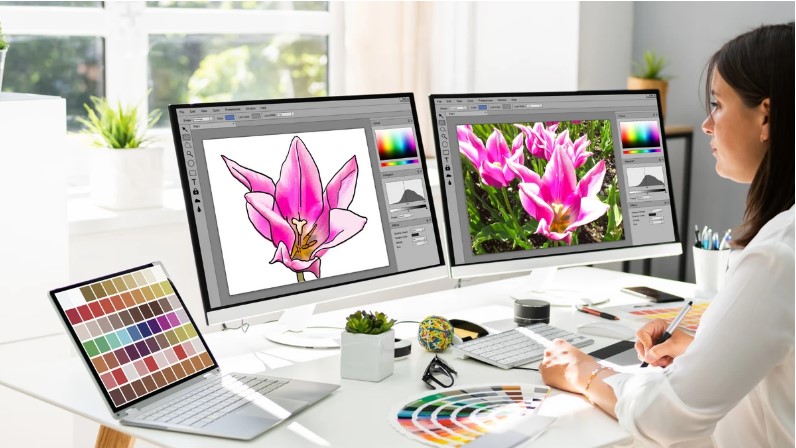
In today’s competitive design and printing world, Vector Art Conversion plays a massive role in helping businesses achieve clean, sharp, and fully scalable artwork. Whether you’re printing logos on apparel, creating signage, designing packaging, or preparing designs for embroidery, raster images just don’t cut it anymore. Blurry edges, pixel distortion, and sizing issues can damage your brand image fast. Vector conversion solves all of that by transforming your artwork into perfectly scalable, production-ready files.
This in-depth guide will show you why vector art conversion is essential for businesses, how the process works, where it’s used, and how it can directly impact quality, efficiency, and profits.
What Is Vector Art Conversion?
Vector art conversion is the process of transforming raster images (pixel-based files like JPG, PNG, or BMP) into vector formats such as AI, EPS, SVG, or PDF. Unlike raster images, vector files are created using mathematical paths instead of pixels. This allows them to scale infinitely without losing quality.
That’s why professional printers, embroidery shops, signage makers, and apparel brands require vector files before production begins.
Why Businesses Need Vector Art Conversion
For any business that relies on visuals, quality is everything. Vector conversion ensures your artwork looks perfect across all platforms and products no matter the size.
Key Business Benefits
- Crystal-clear image quality
- Perfect resizing without distortion
- Consistent brand representation
- Flawless printing and cutting
- Faster production workflows
- Reduced rework and waste
From business cards to billboards, vector files guarantee professional results every time.
Raster vs Vector: What’s the Real Difference?
Understanding the difference between raster and vector graphics is essential for business owners.
Raster Graphics
- Built from tiny pixels
- Lose quality when resized
- Best for photographs
- Common formats: JPG, PNG, TIFF
Vector Graphics
- Built with lines and curves
- Infinitely scalable
- Ideal for logos, illustrations, and typography
- Common formats: AI, EPS, SVG, PDF
If you plan to print, cut, engrave, or embroider a design, vector files are always the right choice.
How the Vector Art Conversion Process Works
Professional vector conversion is not simply clicking a “convert” button. It requires precision, skill, and design expertise.
1. Image Review
The original image is analyzed for:
- Resolution quality
- Design complexity
- Color accuracy
- Fine details
2. Manual Tracing
Designers redraw the entire artwork by hand using vector software, ensuring smooth lines, clean curves, and accurate proportions.
3. Color Matching & Refinement
Colors are carefully matched to brand shades and optimized for both print and digital use.
4. Final File Export
The artwork is delivered in print-ready formats such as AI, EPS, SVG, or PDF, depending on your needs.
Why Automated Vector Tools Fall Short
Free online vector tools may seem convenient, but they often create:
- Jagged edges
- Poor line quality
- Excessive anchor points
- Incorrect color separation
- Print-unfriendly files
While auto-tools work for basic web graphics, businesses need professional-grade vector artwork for production.
Top Industries That Depend on Vector Art Conversion
Vector conversion is a must-have service in multiple industries.
1. Apparel & Merchandise
Used for screen printing, DTG printing, embroidery, vinyl cutting, and heat transfers.
2. Advertising & Marketing
Essential for banners, posters, flyers, brochures, and social media graphics.
3. Signage & Large Format Printing
Required for billboards, vehicle wraps, storefront signs, and wall graphics.
4. Corporate Branding
Used for logos, stationery, presentations, and promotional products.
5. CNC, Laser Cutting & Engraving
Machines require precise vector paths for flawless cutting and engraving.
Vector Art Conversion for Printing
Printing highlights even the smallest design flaws. With vector artwork:
- Edges print sharp
- Colors stay consistent
- Designs scale without distortion
- Layouts look professional
Vector files eliminate the guesswork from printing and prevent costly reprints.
Vector Art Conversion for Embroidery Digitizing
Before a logo is digitized for embroidery, it must be in clean vector format. Vector files:
- Provide smooth stitch paths
- Improve stitch consistency
- Reduce thread breaks
- Increase design accuracy
- Save production time
Raster images often cause distorted stitching and uneven fills when digitized.
Common Mistakes to Avoid in Vector Conversion
- Using automated tracing only
- Ignoring color mode conversions
- Creating too many anchor points
- Leaving open vector paths
- Exporting the wrong file format
Professional handling avoids all of these issues and ensures smooth production.
Most Common Vector File Formats Explained
- AI – Best for editing and professional printing
- EPS – Industry standard for print production
- SVG – Ideal for websites and responsive design
- PDF – Easy to share while preserving vector quality
Each format serves a different purpose, and the right one depends on your specific project.
Why Vector Art Is Crucial for Brand Consistency
A brand’s reputation relies heavily on visual consistency. When your logo looks different on every platform, customers lose trust. Vector files ensure:
- Identical logo sizing everywhere
- Accurate color replication
- Uniform print quality
- Polished brand presentation
This level of consistency strengthens brand recognition and professionalism.
Vector Conversion for Logo Restoration
Many businesses face the issue of old, low-quality logos that exist only in pixel format. Vector conversion helps by:
- Restoring faded designs
- Rebuilding lost details
- Cleaning rough edges
- Updating outdated artwork
This allows businesses to modernize their branding without redesigning from scratch.
Turnaround Time for Vector Art Conversion
Most professional services complete projects within:
- 6–12 hours for simple logos
- 24 hours for average designs
- 48 hours for complex illustrations
Rush orders are usually available for time-sensitive projects.
What Affects the Cost of Vector Art Conversion?
Pricing depends on:
- Design complexity
- Number of colors
- Image resolution
- Required file formats
- Delivery time
Simple single-color logos cost far less than multi-layer artwork with gradients and textures.
DIY Vector Conversion vs Professional Services
You can try converting files yourself, but businesses prefer professionals because they offer:
- Clean production paths
- Accurate color matching
- Optimized printing results
- Fewer design issues
- Faster turnaround
DIY attempts often lead to poor output, reprints, and lost profit.
Vector Conversion for Vinyl & Heat Transfer Cutting
Vinyl cutters and heat press machines require precise vector outlines. Vector files provide:
- Accurate cutting paths
- Clean edges
- Faster weeding
- Zero material waste
Raster images simply cannot guide cutting machines correctly.
Large-Scale Printing & Vector Art Conversion
For projects like:
- Billboards
- Trade show banners
- Building graphics
- Vehicle wraps
Vector files ensure flawless clarity at massive sizes without any pixelation or blur.
Long-Term Business Benefits of Vector Art Conversion
- Reduced production errors
- Lower printing costs
- Faster work approvals
- Higher customer satisfaction
- Stronger brand credibility
Vector conversion is not an expense, it’s a smart business investment.
Manual Vector Conversion vs Auto Tracing
Professional designers:
- Control curve precision
- Optimize color layering
- Reduce anchor overload
- Fine-tune print details
Software alone simply can’t compete with trained expertise.
Who Should Use Professional Vector Art Conversion?
- Print shops
- Embroidery businesses
- Graphic designers
- Apparel brands
- Marketing agencies
- Product manufacturers
- Event planners
If your business produces any printed or stitched product, vector files are essential.
Final Thoughts
Fast and reliable vector art conversion is the foundation of professional printing, stitching, cutting, and branding. It ensures sharp visuals, flawless production, consistent branding, and long-term cost savings. For businesses that care about quality, efficiency, and professional results, vector artwork is no longer optional; it’s a necessity.
For businesses seeking trusted, high-quality, and production-ready vector conversion services with fast turnaround and flawless accuracy, Absolute Digitizer remains a reliable choice in the industry.



Leave a Reply