
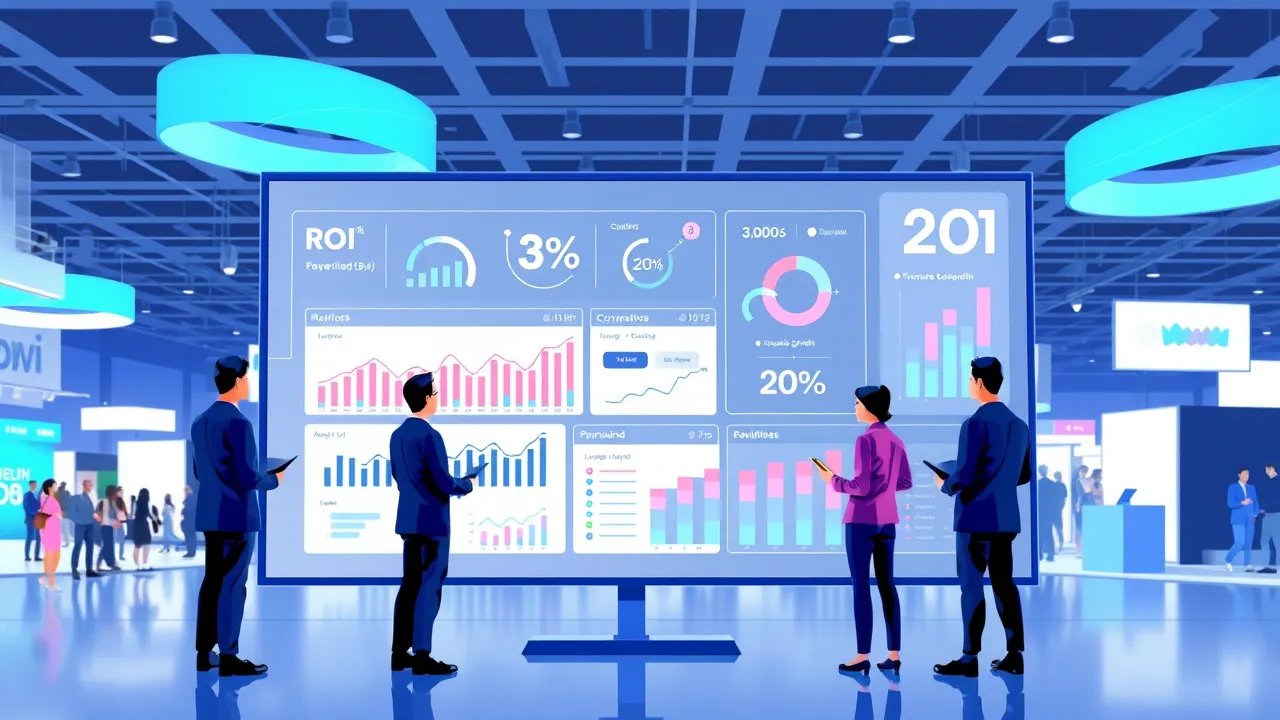
Tradeshow events are powerful platforms for brands and organizations. They bring together audiences, showcase products, and create opportunities for growth. Yet the real measure of success is not only in attendance or applause. It is in the numbers. Tradeshow ROI is the key metric that shows whether the event was worth the investment.
Organizers often ask how to calculate tradeshow ROI in a way that feels clear and practical. The answer lies in combining event ROI calculation with tradeshow success metrics that reflect both financial and non-financial outcomes. When done correctly, ROI becomes more than a number. It becomes a guide for future planning.
This blog explains how to calculate tradeshow ROI for success in 2026. It covers the essentials, highlights the metrics, and shows how organizers can maximize tradeshow ROI with smart strategies.
Understanding Tradeshow ROI
Tradeshow ROI is the return on investment from a tradeshow. It compares the value gained with the cost spent. Value can be measured in sales, leads, brand awareness, or attendee satisfaction. Costs include venue, staff, marketing, and technology.
Event ROI calculation is not only about profit. It is about understanding the balance between effort and outcome. Tradeshow success metrics help identify what worked and what did not. This makes ROI a tool for learning as well as measuring.
Step 1: Define Clear Objectives
Before calculating ROI, organizers must define objectives. These can include lead generation, sales, brand exposure, or networking. Without clear goals, numbers lose meaning.
Tradeshow success metrics should align with these objectives. For example, if the goal is lead generation, the metric could be the number of qualified leads. If the goal is brand exposure, the metric could be social media mentions or app downloads.
Step 2: Track Event Registration
Event registration is often the first measurable step. The number of registrations shows interest. The quality of registrations shows relevance. AI-powered systems can help track who registered, how they registered, and what they expect.
Registration data becomes part of event ROI calculation. It shows how marketing efforts worked and whether the audience matched the target. To maximize tradeshow ROI, organizers must analyze registration numbers carefully.
Step 3: Measure Event Check-In and Badge Printing
Event check-in and badge printing are practical steps that also provide data. The number of attendees who checked in compared to those who registered shows engagement. Badge printing on demand reduces waste and provides accurate counts. These numbers feed into tradeshow success metrics. They show how many people actually attended and how smoothly the process worked. Smooth check-in improves satisfaction, which indirectly supports ROI.
Step 4: Use Event App Data
An event app is more than a communication tool. It is a source of valuable data. Attendees use apps to view schedules, maps, and updates. They also use them to interact with sessions, polls, and networking features. Event app data helps calculate tradeshow ROI by showing engagement levels. Metrics like session attendance, poll participation, and app downloads reflect interest. Organizers can use this data to maximize tradeshow ROI by improving future planning.
Step 5: Calculate Costs
Costs must be tracked carefully. They include venue rental, staff, marketing, catering, technology, and logistics. Event ROI calculation requires accurate cost data. Tradeshow success metrics are meaningless without cost comparison. For example, generating 500 leads may sound impressive. But if the cost is too high, ROI may be low. To maximize tradeshow ROI, organizers must balance spending with outcomes.
Step 6: Measure Outcomes
Outcomes can be financial or non-financial. Financial outcomes include sales, contracts, or leads converted. Non-financial outcomes include brand awareness, attendee satisfaction, or media coverage. Tradeshow ROI combines both. Event ROI calculation should include direct revenue as well as indirect value. Tradeshow success metrics like lead quality, attendee feedback, and app engagement help measure these outcomes.
Step 7: Apply the ROI Formula
The basic formula for ROI is:
ROI = (Value – Cost) / Cost × 100
Value is the total gain from the tradeshow. Cost is the total expense. The result is expressed as a percentage.
To calculate tradeshow ROI SharePoint consulting in Sydney, organizers must define what counts as value. This can include sales, leads, or brand exposure. Event ROI calculation becomes meaningful only when value is clearly defined.
Step 8: Analyze Tradeshow Success Metrics
Tradeshow success metrics provide context for ROI. They show which areas contributed most to value. Metrics can include:
Number of registrations
Number of check-ins
Badge printing efficiency
Event app downloads and usage
Leads generated
Sales closed
Attendee satisfaction scores
Analyzing these metrics helps maximize tradeshow ROI. Organizers can see what worked and what needs improvement.
Step 9: Report and Improve
ROI is not the end. It is the beginning of improvement. Organizers must report findings, share insights, and adjust strategies. Event ROI calculation becomes a tool for growth.
Tradeshow success metrics guide future planning. Event registration data shows marketing impact. Event check-in and badge printing data shows operational efficiency. Event app data shows engagement. Together, they help maximize tradeshow ROI.
Bringing It All Together
Calculating tradeshow ROI is about more than numbers. It is about understanding the story behind the event. Event registration shows interest. Event check-in and badge printing show engagement. Event app data shows interaction. Costs show effort. Outcomes show success.
Event ROI calculation combines all these elements. Tradeshow success metrics provide the details. The formula provides the percentage. The insights provide the path forward.
To maximize tradeshow ROI in 2026, organizers must think about both financial and non-financial outcomes. They must track data carefully, analyze metrics, and apply the formula. They must use technology like event apps to gather insights. They must balance costs with value.
Final Thoughts
Tradeshow ROI is the measure of success in 2026. To calculate tradeshow ROI, organizers must combine event ROI calculation with tradeshow success metrics. They must track event registration, event check-in and badge printing, and event app data. They must measure costs and outcomes. They must apply the formula and analyze results.
The future of tradeshow planning will depend on how well organizers maximize tradeshow ROI. It is not only about profit. It is about learning, improving, and creating experiences that matter.By following this guide, organizers can calculate tradeshow ROI with confidence. They can measure success, improve strategies, and plan events that deliver real value.







Leave a Reply