
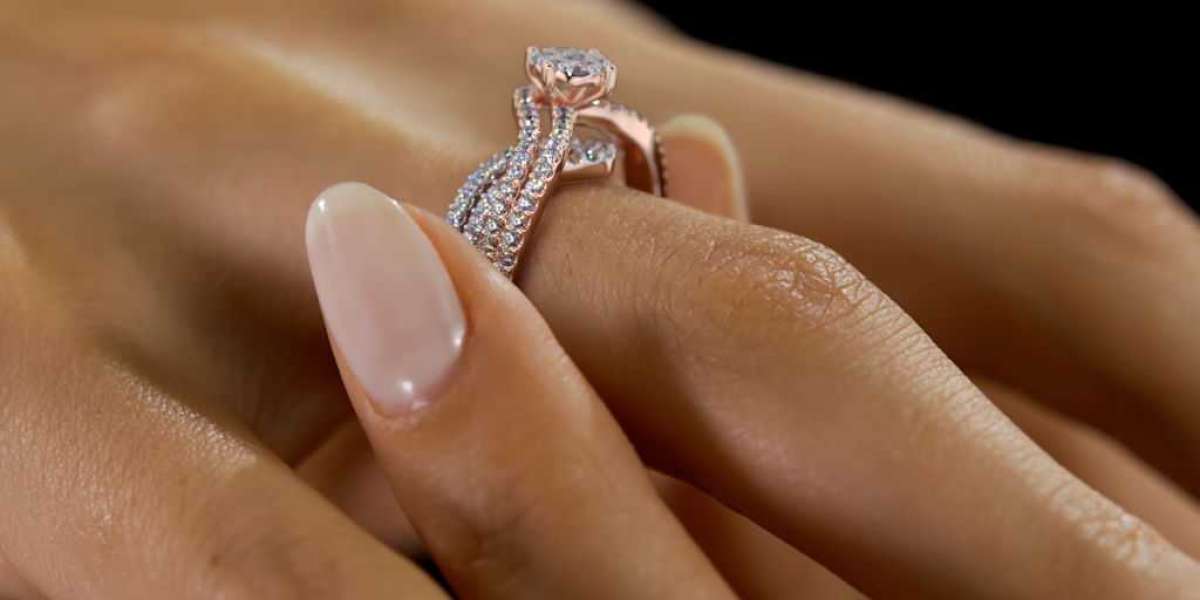
Buying a diamond is one of the most emotional and significant purchases you will ever make. Whether it is for an engagement, a wedding, or a special anniversary gift, you want it to be perfect. But along with the excitement comes a little bit of anxiety. You stand at the jewelry counter, looking at a sparkling stone, and wonder: “Am I paying too much?” This is a common worry, especially in a market like Pakistan where prices can vary significantly from one shop to another.
The good news is that you don’t need to be a gemologist to understand if you are getting a good deal. With a little bit of knowledge and the right questions, you can confidently navigate the market. This guide will walk you through exactly how to determine if the Diamond ring price you are quoted is fair, honest, and worth your hard-earned money.
Understanding the Basics: The 4Cs
Before you can even begin to judge a price tag, you have to understand what you are buying. Diamonds are valued globally based on a universal standard known as the 4Cs: Cut, Color, Clarity, and Carat Weight. Without knowing these, comparing prices is like comparing apples to oranges.
Cut
The cut is arguably the most important factor. It doesn’t refer to the shape (like round or princess) but how well the diamond interacts with light. A well-cut diamond reflects light beautifully, giving it that signature sparkle. A poorly cut diamond will look dull, even if it has high clarity. If a jeweler offers you a surprisingly low Diamond ring price, check the cut quality first. It might be cut too deep or too shallow to save weight, which ruins the brilliance.
Color
Diamonds are graded on a scale from D (colorless) to Z (light yellow or brown). The less color a diamond has, the more expensive it is. However, to the naked eye, the difference between a D (colorless) and a G (near-colorless) is very hard to spot, but the price difference is massive. If you want a fair price, consider going slightly lower on the color scale to get better value.
Clarity
Clarity measures the number of internal flaws, called inclusions. These are natural imperfections. A “Flawless” diamond is incredibly rare and expensive. Most diamonds have some inclusions. The trick is to find an “eye-clean” diamond, meaning you can’t see the flaws without a magnifying glass. Paying extra for a flawless grade when an eye-clean stone looks identical is often unnecessary.
Carat
Carat refers to the weight of the diamond. Prices jump significantly at full carat and half-carat marks (like 1.0 or 0.5). Buying a 0.95-carat diamond instead of a 1.0-carat one can look virtually the same size but save you a significant amount of money.
The Importance of Certification
In Pakistan, trust is everything in business, but when it comes to diamonds, you need proof. Never buy a significant diamond without a grading report from a reputable laboratory. The most trusted labs globally are the GIA (Gemological Institute of America) and AGS (American Gem Society).
Why does this matter for the price? A certificate is an unbiased report of exactly what you are buying. If a jeweler tells you a diamond is “VVS1 Clarity” but has no certificate to prove it, they might be charging you a premium price for a lower-quality stone. Always ask to see the certificate. If the Diamond ring price seems too good to be true and there is no certificate, walk away. The certificate ensures that the 4Cs claimed by the seller are accurate, allowing you to compare prices fairly against other certified stones.
Calculating Price Per Carat
A great way to check fairness is to look at the price per carat. This is a common industry metric. If you are looking at two different rings, divide the total price of the stone by its carat weight.
For example, if a 0.5-carat stone costs PKR 150,000, the price per carat is PKR 300,000. If you see a 0.5-carat stone elsewhere with similar specs costing PKR 200,000 per carat, you know the first one is priced higher. This simple math helps level the playing field when you visit different shops in Lahore, Karachi, or Islamabad. It cuts through the sales talk and gives you a raw number to compare.
Market Trends in Pakistan
The diamond market in Pakistan operates slightly differently than in Western countries. Here, gold weight often plays a huge role in jewelry pricing, but diamonds are priced separately.
Currency Fluctuations
Since diamonds are an internationally traded commodity priced in US Dollars, the Diamond ring price in Pakistan is heavily influenced by the exchange rate. If the Rupee weakens against the Dollar, diamond prices will rise locally, even if global diamond prices are stable. A fair price today might look very different from a fair price six months ago simply due to currency changes.
Resale Value Policies
In Pakistan, many jewelers offer buy-back policies. They might promise to buy the ring back at 80% or 90% of the purchase price later. While this sounds great, sometimes jewelers inflate the initial selling price to cover this “guarantee.” A fair price should be based on the diamond’s current value, not a future promise. Ask for the cash price without the buy-back guarantee to see the real difference.
Local Considerations and Hidden Costs
When you are standing in a bustling jewelry market in Pakistan, there are other factors that get added to the final bill. To know if the total price is fair, you need to break it down.
Making Charges
This is the cost of labor to create the ring setting. Making charges in Pakistan can vary wildly based on the complexity of the design and the reputation of the jeweler. Sometimes, a high Diamond ring price is actually just a reasonable diamond price hidden behind exorbitant making charges. Ask the jeweler to separate the price of the stone from the price of the gold and the making charges. This transparency is key to determining fairness.
Gold Purity
Most diamond rings are set in 18K or 21K gold. 24K gold is too soft for holding diamonds securely. Ensure you aren’t paying 22K gold prices for an 18K gold setting. The price of gold is published daily in Pakistan; check the rate on the day you buy to ensure the gold portion of the ring is priced fairly according to the daily rate.
How to comparison Shop Effectively
You wouldn’t buy a car from the first dealership you visit, and you shouldn’t buy a diamond ring from the first shop either. Comparison shopping is your best weapon against unfair pricing.
- Visit Multiple Markets: Don’t just stick to one high-end mall. Visit established gold markets in your city. The overhead costs for a shop in a fancy mall are higher, which often translates to a higher Diamond ring price. A family-owned shop in an older market might offer the same quality stone for much less because their rent is lower.
- Online vs. Offline: While buying online in Pakistan is still growing, you can use international websites to check global baseline prices for loose diamonds. If a global site lists a 0.5-carat GIA certified stone for $1,000, and a local jeweler asks for $2,500 for the same specs, you know the markup is too high.
- Negotiation: In Pakistan, negotiation is expected. The first price quoted is rarely the final price. If you have done your research on the 4Cs and gold rates, you can negotiate confidently. You can say, “I saw a similar spec diamond at another shop for this price,” which encourages the jeweler to offer you a fairer deal.
Red Flags to Watch Out For
Sometimes, a price that seems fair is actually a trap. Here are some warning signs that the Diamond ring price might not be honest:
- “Blue-White” Diamonds: Beware of sellers using old terms like “Blue-White.” This often refers to diamonds with strong fluorescence. While fluorescence isn’t always bad, it usually lowers the value of a diamond. Selling it at a premium is unfair.
- Total Carat Weight vs. Center Stone: Be careful with rings that have many small diamonds. A ring with a total weight of 1 carat (made of many tiny stones) is worth significantly less than a single 1-carat stone. Jewelers might market the “1 carat total weight” to make the price seem like a steal compared to a single stone, but the value is not the same.
- Pressure Tactics: If a jeweler says the Diamond ring price is only valid for “right now” or “today only,” be cautious. Diamonds are not perishable goods. Fair pricing remains relatively stable day-to-day (barring major currency shifts). Pressure tactics are often used to stop you from comparing prices elsewhere.
The Value of Settings and Metal
Don’t forget that the ring is more than just the diamond. The metal band itself has value. In Pakistan, platinum is becoming popular but remains expensive. White gold is a common alternative.
If you are buying white gold, ask if it is rhodium plated. Over time, white gold can turn slightly yellow and needs re-plating. A fair price should reflect the maintenance the ring might need. Platinum is more durable and naturally white, justifying a higher price tag. Ensuring you are paying for the correct metal purity and weight is crucial to the overall fairness of the deal.
To read more blog: Click Here
Trust Your Gut and Build Relationships
Ultimately, checking if a Diamond ring price is fair involves a mix of hard data and intuition. Does the jeweler answer your questions patiently? Do they show you the inclusions under a loupe? Do they weigh the gold in front of you?
In Pakistan, building a relationship with a family jeweler is common. A trusted jeweler who values your long-term business is more likely to give you a fair price than a shop looking for a quick one-time sale. Ask friends and family for recommendations. Reputation in the local market is a strong indicator of fair business practices.
Conclusion
Buying a diamond ring in Pakistan doesn’t have to be a guessing game. By educating yourself on the 4Cs, insisting on certification, checking daily gold rates, and comparing prices across different sellers, you can determine the true value of what you are buying.
Remember, a fair price is one where you pay for the quality you actually get. It is a balance between the stone’s quality, the craftsmanship of the ring, and the current market rates. Don’t rush the process. Ask questions, do the math, and don’t be afraid to walk away if the numbers don’t add up. When you finally make that purchase, you will do so with the peace of mind that the sparkling ring on your finger is truly worth every rupee.





Leave a Reply