
Runner’s knee, also known as patellofemoral pain syndrome, is one of the most common complaints among runners and active people. It usually shows up as a dull ache around or behind the kneecap, especially when running downhill, climbing stairs, or sitting for long periods. The good news is that targeted stretching can reduce pain, improve movement, and help prevent flare-ups.
At a sports injury clinic in Abbotsford, we often see runner’s knee caused by tight muscles, poor alignment, or overuse. Stretching the right areas can take pressure off the knee and support long-term recovery. Below are five effective stretches that can make a real difference when done consistently.
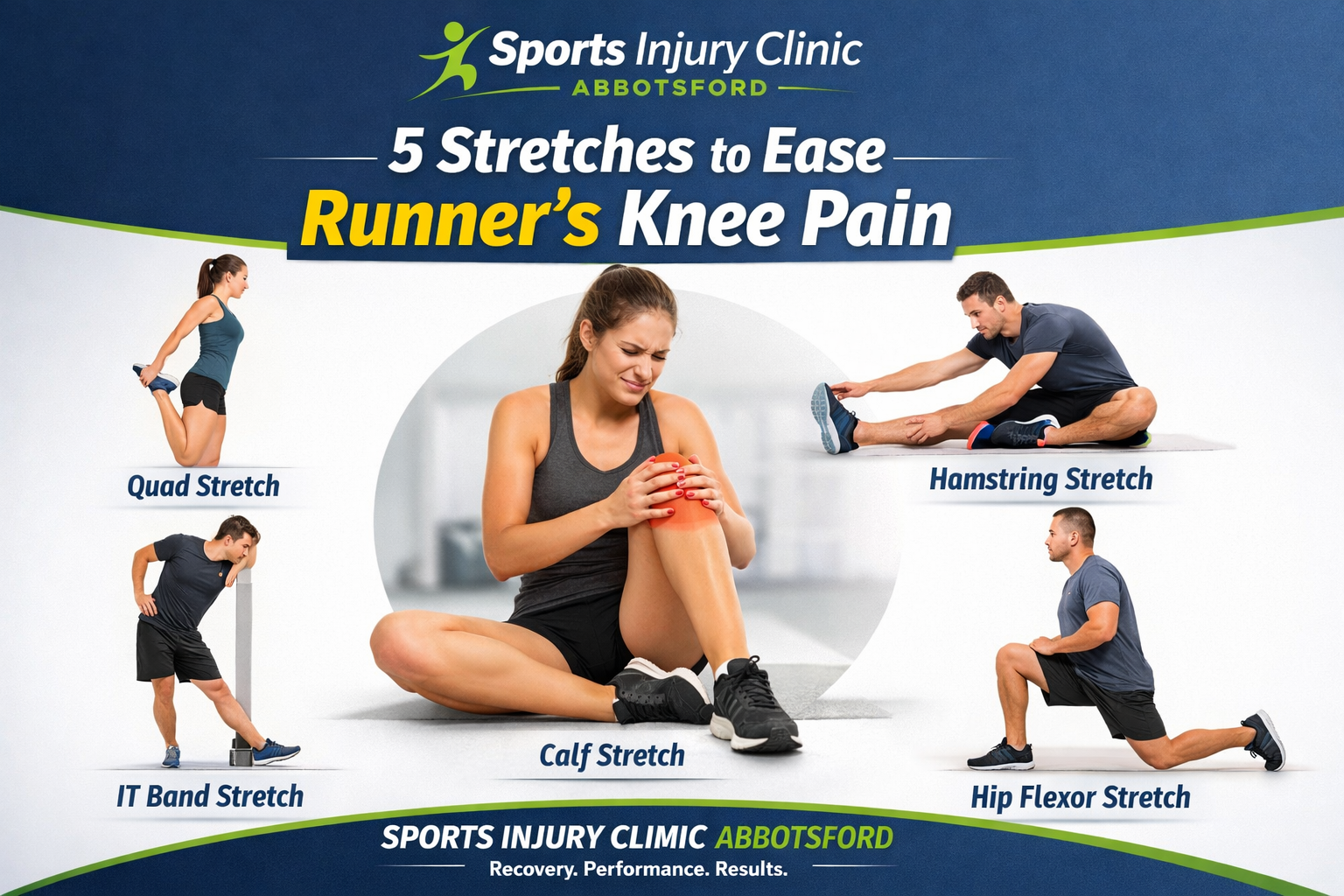
1. Quadriceps Stretch
Tight quadriceps are a major contributor to runner’s knee. When these muscles pull too hard on the kneecap, it can cause irritation and pain.
How to do it:
Stand tall and bend one knee, bringing your heel toward your glutes. Hold your ankle with your hand and gently pull until you feel a stretch in the front of your thigh. Keep your knees close together and your hips tucked under.
Hold for: 20 to 30 seconds on each side
Why it helps: Loosening the quads reduces stress on the kneecap and improves knee tracking during running.
2. Hamstring Stretch
Tight hamstrings can change how your knee moves and absorbs impact, leading to pain over time.
How to do it:
Sit on the floor with one leg extended and the other bent. Hinge forward at the hips while keeping your back straight and reach toward your toes. You should feel the stretch along the back of your thigh.
Hold for: 20 to 30 seconds on each side
Why it helps: Flexible hamstrings allow the knee to move more freely and reduce strain during each stride.
3. Iliotibial (IT) Band Stretch
The IT band runs along the outside of the thigh and is often tight in runners. When irritated, it can pull on the knee and cause pain on the outer side.
How to do it:
Stand upright and cross the affected leg behind the other. Lean your torso slightly to the opposite side until you feel a stretch along the outer thigh and hip.
Hold for: 20 to 30 seconds
Why it helps: Reducing IT band tension can ease lateral knee pain and improve overall leg alignment.
4. Hip Flexor Stretch
Tight hip flexors are common in runners and people who sit a lot. They can affect posture and increase knee stress.
How to do it:
Kneel on one knee with the other foot forward in a lunge position. Gently shift your weight forward while keeping your torso upright. You should feel the stretch in the front of the hip on the kneeling side.
Hold for: 20 to 30 seconds on each side
Why it helps: Flexible hip flexors improve running mechanics and reduce compensations that overload the knee.
5. Calf Stretch
The calves play a bigger role in knee health than many people realize. Tight calves can limit ankle movement and force the knee to absorb extra impact.
How to do it:
Stand facing a wall and place your hands against it. Step one foot back and keep the heel flat on the ground. Lean forward slightly until you feel the stretch in your calf.
Hold for: 20 to 30 seconds on each side
Why it helps: Improving calf flexibility supports smoother movement through the ankle and knee during running.
How Often Should You Stretch?
For best results, perform these stretches at least once a day, especially after running or training. Consistency matters more than intensity. Stretching should feel relieving, not painful. If pain increases or does not improve, it may be a sign that more targeted care is needed.
When to Visit a Sports Injury Clinic in Abbotsford
While stretching is a powerful tool, it is not always enough on its own. Runner’s knee often involves muscle imbalances, poor movement patterns, or training errors that need professional attention. At a sports injury clinic in Abbotsford, physiotherapists can assess how your hips, knees, and ankles work together and create a personalized treatment plan.
Treatment may include hands-on therapy, strength training, running analysis, and guided exercise progression. Addressing the root cause not only relieves pain but also helps you return to running with confidence.
Final Thoughts
Runner’s knee does not have to sideline you for good. With the right stretches and proper care, most runners can reduce pain and prevent it from coming back. Start with these five stretches, listen to your body, and do not ignore persistent discomfort.
If knee pain is holding you back, a sports injury physiotherapist in Abbotsford can help you move better, run stronger, and stay active for the long run.







Leave a Reply