
In the complex anatomy of a home, the plumbing system serves as the vital circulatory network. Just as the health of a living organism depends on the integrity of its vessels, the longevity and safety of a residence depend on the condition of its pipes. Over decades, environmental factors, mineral deposits, and chemical reactions can degrade this hidden infrastructure, leading to a cascade of systemic failures. The process of Repiping a House is not merely a repair; it is a full-scale restoration of your home’s fundamental health.
Choosing to undergo a comprehensive repipe is a proactive decision that transcends the “patch-and-repair” cycle. It is an investment in the purity of your water, the stability of your water pressure, and the ultimate preservation of your property’s structural integrity.
Repiping a House: The Warning Signs
The need for repiping a house rarely appears as a sudden catastrophe. Instead, it whispers through a series of subtle, persistent symptoms that indicate the internal degradation of the piping material.
Persistent Pressure Fluctuations
One of the first indicators of aging pipes particularly galvanized steel is a gradual loss of water pressure. As rust and mineral scale accumulate on the interior walls of the pipe, the diameter through which water can flow is restricted. If your morning shower has lost its vigor or if the pressure drops significantly when a second faucet is opened, the system is likely struggling against decades of internal buildup.
Discoloration and Metallic Aftertaste
The quality of the water reaching your glass is a direct reflection of the pipes it travels through. Brown, red, or yellow-tinted water—especially after the system hasn’t been used for several hours is a clear sign of internal oxidation. This is not just an aesthetic issue; it is a sign that the structural walls of your plumbing are thinning, shedding flakes of metal into your daily supply.
The Material Shift: Engineering for the Next Century
When repiping a house, the selection of modern materials is a critical bridge between past failures and future reliability. Today’s plumbing standards prioritize longevity, flexibility, and resistance to the corrosive elements found in modern municipal water.
The Durability of Copper
Copper remains a prestigious choice for many homeowners. Its natural antimicrobial properties and extreme resistance to heat make it a gold standard for both hot and cold water lines. A professionally installed copper system is virtually impervious to the UV degradation and oxidative stresses that claim lesser materials, often lasting upwards of fifty to seventy years.
The Versatility of PEX (Cross-linked Polyethylene)
PEX has revolutionized the industry by offering a flexible, high-performance alternative to rigid piping. Because PEX can be snaked through walls with minimal demolition, it often reduces the labor intensity of a project. It is highly resistant to scale buildup and chlorine, and its natural elasticity makes it far more resilient against bursting in freezing temperatures compared to traditional metal pipes.
The Technical Execution: A Symphony of Precision
The act of repiping a house is a surgical undertaking that requires a blend of engineering expertise and respect for the home’s existing architecture. A professional approach ensures that the transition from the old system to the new is seamless and minimally disruptive.
Strategic Access and Minimizing Footprint
A sophisticated repipe service focuses on “surgical access.” Rather than broad demolition, technicians use specialized tools to create small, strategic openings in drywall or flooring. This allows for the removal of the failing lines and the installation of new ones while preserving the aesthetic finish of the home.
Manifold Systems and Zone Control
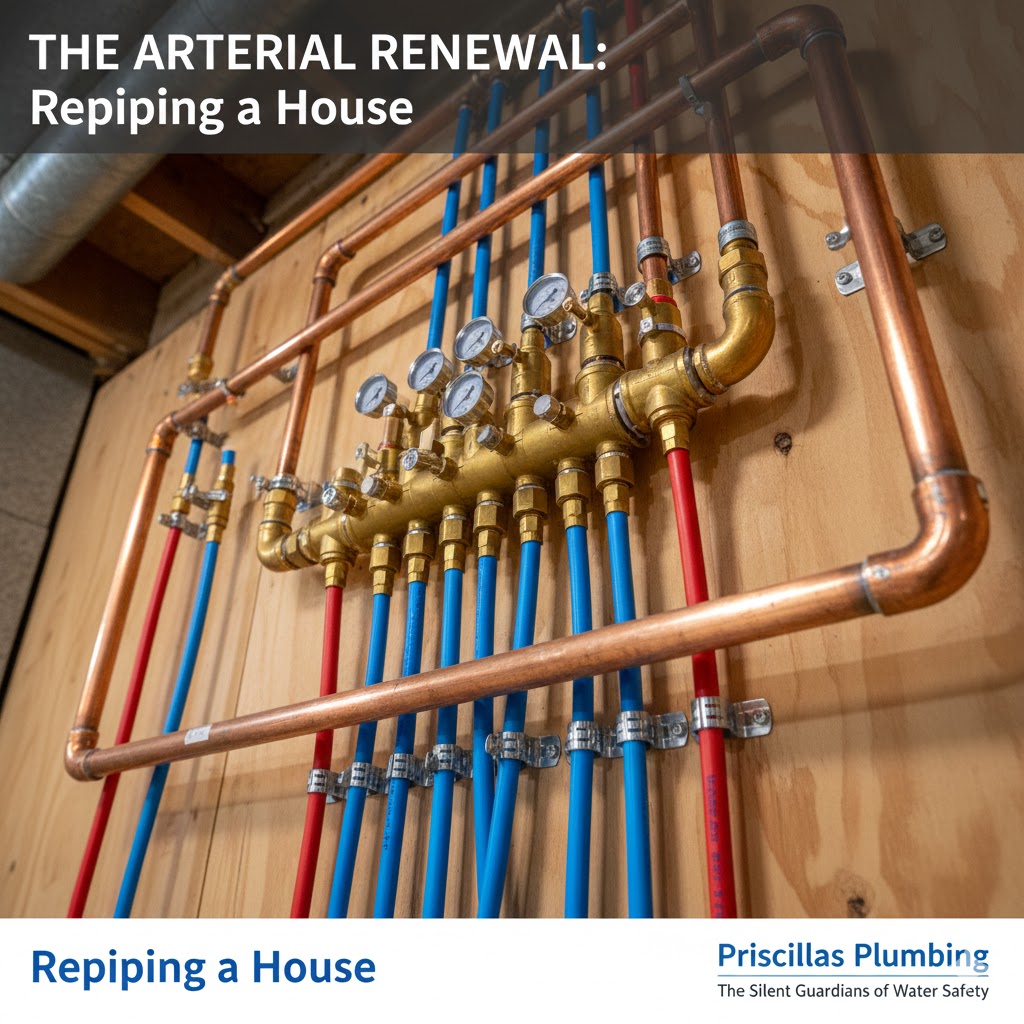
Modern repiping often involves the installation of a manifold system essentially a central “circuit breaker” for your water. This allows for individual control over every fixture in the house. If a single faucet requires maintenance in the future, that specific line can be shut off at the manifold without deactivating the water for the entire residence.
The Economic and Structural ROI of Repiping
While the initial undertaking of repiping a house is significant, the return on investment is multifaceted, affecting both the home’s market value and its monthly operating costs.
Insurance Premium Reductions: Many insurance providers view aging plumbing as a high-risk liability. Upgrading to modern materials like PEX or copper can often lead to lower premiums, as the risk of catastrophic water damage is virtually eliminated.
Energy Efficiency: New pipes, particularly when properly insulated, maintain water temperature more effectively as it travels from the heater to the tap. This reduces the energy required to provide hot water and minimizes the “wait time” at the fixture.
Appraisal Value: For a prospective buyer, a recently repiped home is a massive asset. It signals that the “hidden” maintenance has been handled, removing the fear of future plumbing emergencies from the purchasing equation.
Protecting the Home’s Foundation: The Leak Prevention Factor
The most insidious threat posed by old pipes is the pinhole leak. These tiny breaches often occur behind walls or under slabs, leaking slowly for months before they are detected. This moisture leads to the growth of mold and the rot of structural timbers.
By repiping a house, you eliminate the localized weak points that lead to these “stealth” leaks. A new, unified system provides a level of security that cannot be achieved by patching individual sections. It is a comprehensive shield for your home’s foundation and framing, ensuring that the dry areas of your home stay dry.
The Human Element: Enhancing Daily Life
Beyond the technicalities and the financial data, repiping is about the quality of daily life. It is the peace of mind that comes from knowing the water your family uses for bathing, cooking, and drinking is flowing through clean, untainted channels. It is the simple luxury of a high-pressure shower and the silence of a plumbing system that no longer “clangs” or “whistles” when the tap is turned.
Proactive maintenance of your home’s core infrastructure is a vital component of holistic property management, ensuring that minor issues do not evolve into systemic failures. By integrating advanced diagnostic techniques with a long-term strategy for mechanical health, homeowners can effectively safeguard their investment while enhancing the overall efficiency and safety of their living environment.
Conclusion
A home is more than a structure; it is a legacy. Maintaining that legacy requires an uncompromising approach to its most essential systems. When the time comes to address the aging infrastructure of your residence, the quality of the craftsmanship and the integrity of the materials are the only factors that truly matter.
At Priscillas Plumbing, we view every repiping project as an opportunity to restore your home to its peak performance. We bring a level of wise, meticulous attention to every joint and connection, ensuring that your new plumbing system stands as a testament to durability and safety. We don’t just replace pipes; we provide the peace of mind that comes from a job executed with surgical precision and deep professional pride. When you choose us, you are choosing a future of crystal-clear water and an infrastructure built to endure for generations.






Leave a Reply